
Diabetes mellitus
Diabetes mellitus is a group of metabolic disorders characterized by hyperglycemia, which are associated with multiple comorbidities and reduced quality of life, along with increased disability and mortality.
Currently, diabetes mellitus has become a serious global public health problem with a marked increase in its prevalence. According to estimates by the International Diabetes Federation (IDF) in 2021, the global prevalence of diabetes mellitus was 537 million people, accounting for 10.5% of the world's population. The trajectory of the diabetes pandemic is concerning: the prevalence of DM is expected to increase to 643 million (11.3%) by 2030 and 783 million (12.2%) by 2045, and by 2050, 1.31 billion people will have diabetes.
For a long time, diabetes mellitus was considered exclusively as a disorder of carbohydrate metabolism. However, modern research has radically changed this view. Today it is clear that an inflammatory process underlies the development of both major types of diabetes, although its nature and mechanisms differ somewhat. Most cases of diabetes fall into two broad etiopathogenetic categories: type 1 and type 2.
People with high blood sugar levels, especially those with absolute insulin deficiency, may experience symptoms such as increased appetite, polydipsia, polyuria, weight loss, increased appetite, and vision problems. Some people with diabetes may not experience any symptoms, especially patients with type 2 diabetes in the early stages.
Type 1 diabetes mellitus is an autoimmune disease characterized by targeted destruction of insulin-producing β-cells of the pancreas, while other pancreatic cells remain unaffected. T1DM demonstrates significant variation in terms of the severity of the autoimmune response, age of onset, and response to treatment.
Type 2 diabetes mellitus is the more common form, accounting for 90-95% of all diabetes cases. T2DM is a heterogeneous disorder characterized by varying degrees of beta-cell dysfunction combined with insulin resistance. Various pathophysiological studies have provided significant insight into the development and progression of diabetes in relation to insulin secretion and resistance. People at risk of developing T2DM initially exhibit insulin resistance, but it is compensated by increased insulin secretion from β-cells. However, as the disease progresses, the functional reserve of the pancreas becomes inadequate to meet the increasing demand for insulin secretion, leading to a point where, at the time of diabetes diagnosis, beta-cells are no longer able to produce sufficient insulin. Although the degree of insulin resistance and beta-cell dysfunction may vary among individuals with T2DM, it is widely recognized that abnormal insulin sensitivity can occur up to 15 years before the clinical diagnosis of diabetes. Recently, growing evidence has emphasized the importance of low-grade inflammation in the pathogenesis of T2DM. Moreover, people who eventually develop T2DM often show signs of inflammation even before disease onset. Studies have established a strong link between inflammatory markers and abnormalities in lipid and carbohydrate metabolism, as well as associations with atherosclerosis and obesity. Chronic low-grade inflammation has been observed in obesity, insulin resistance, and early stages of atherosclerosis. Various inflammatory mediators, such as cytokines, adipokines, and chemokines, contribute to β-cell dysfunction and insulin resistance. An autoimmune mechanism may also be involved in the development of T2DM. Such cases constitute the group of so-called "Latent Autoimmune Diabetes in Adults" (LADA). This subtype resembles type 2 diabetes but is characterized by the presence of pancreatic autoantibodies associated with autoimmune diabetes. Latent autoimmune diabetes can be observed in both adults and children and adolescents. The prevalence of GAD autoantibodies in clinically diagnosed individuals with type 2 diabetes varies between ethnic and regional groups, ranging from 5% to 14%.
Despite impressive progress in the development of new classes of glucose-lowering drugs, the fundamental problems of therapy for both types of diabetes mellitus remain unresolved. Current treatment is largely symptomatic, but not pathogenetic. It fights the consequence — high blood sugar levels — but does not eliminate the causes of the disease, the main one being inflammatory damage. In the absence of proper pathogenetically based therapy, symptomatic therapy cannot ensure stable disease control. For example, insulin therapy for T1DM provides optimal glycemic control in only about 20% of patients.
Both types of diabetes share a common pathogenetic core — inflammation — and this should be the main point of therapeutic application, along with pancreatic regeneration. Given the prolonged latent phase of the disease, it is necessary to take preventive therapeutic measures before the manifestation of the disease, which is often already accompanied by developed target organ complications.
How does treatment work at the "PlanetaMed" clinic?
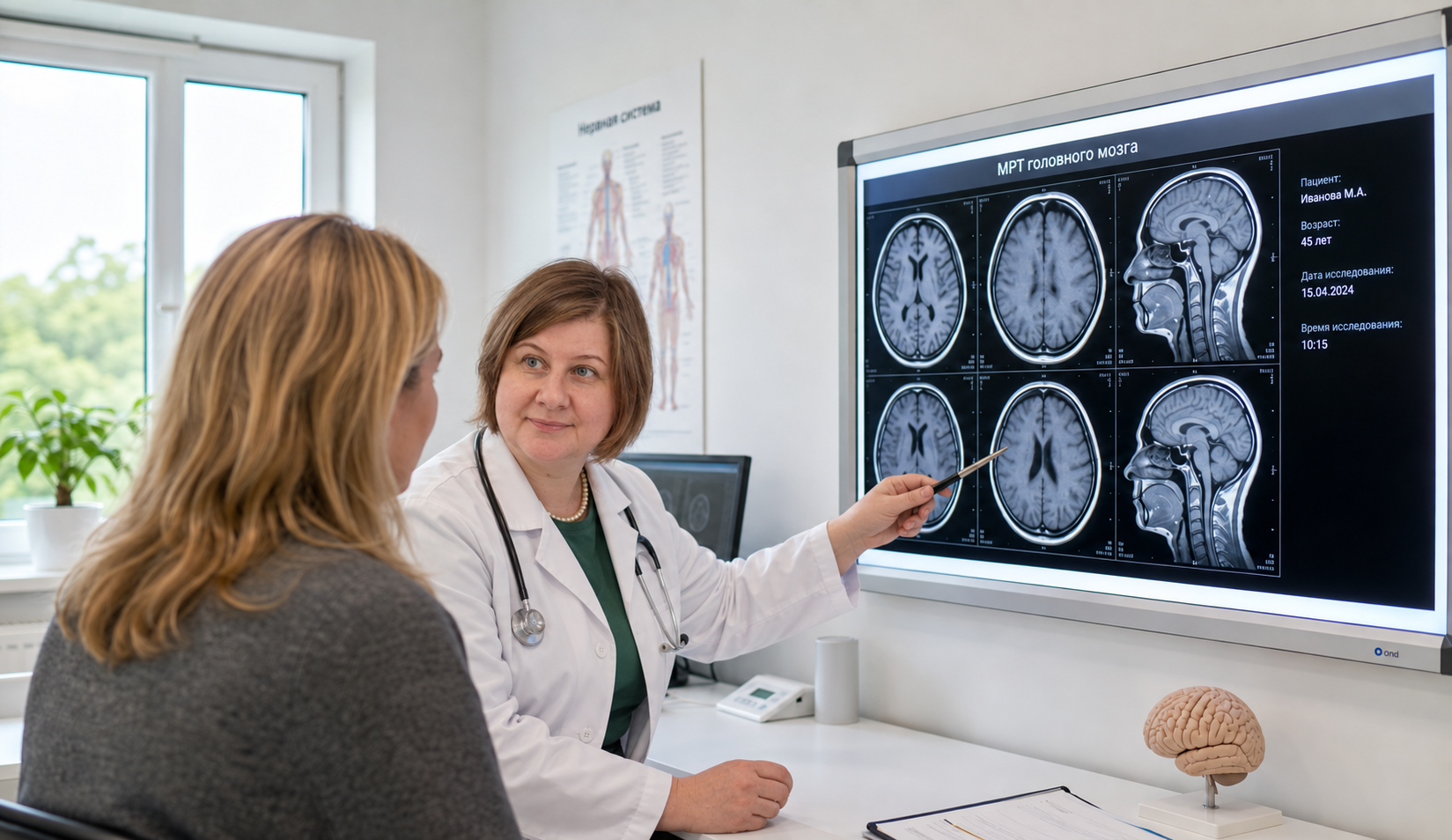
The first stage is a comprehensive examination of the body.
We go beyond simply making a diagnosis. It is crucial for us to understand how all body systems function, evaluate metabolic processes, inflammatory activity, immune status, gut and mitochondrial health, vitamin and trace element deficiencies, as well as other indicators that may influence the development of the disease.
It is high-quality diagnostics that forms the foundation of effective treatment.
What is included in the primary diagnostic list?
- Complete blood count (CBC)
- Biochemical blood test (total protein, lactate, bilirubin, urea, creatinine, ALT, AST, eosinophil cationic protein, NSE, S100, total IgE, TNF-alpha, C-reactive protein, rheumatoid factor)
- Urine organic acids — 60 parameters (urine)
- Amino acids — 48 parameters (blood)
- ASO (Antistreptolysin O)
- Human Herpesvirus 6 (HHV-6), quantitative
*Additional data may be required; the clinic administrators will provide you with more precise information.
Comprehensive diagnostics
The first stage is a comprehensive examination of the body.
We go beyond simply making a diagnosis. It is crucial for us to understand how all body systems function, evaluate metabolic processes, inflammatory activity, immune status, gut and mitochondrial health, vitamin and trace element deficiencies, as well as other indicators that may influence the development of the disease.
It is high-quality diagnostics that forms the foundation of effective treatment.
What is included in the primary diagnostic list?
- Complete blood count (CBC)
- Biochemical blood test (total protein, lactate, bilirubin, urea, creatinine, ALT, AST, eosinophil cationic protein, NSE, S100, total IgE, TNF-alpha, C-reactive protein, rheumatoid factor)
- Urine organic acids — 60 parameters (urine)
- Amino acids — 48 parameters (blood)
- ASO (Antistreptolysin O)
- Human Herpesvirus 6 (HHV-6), quantitative
*Additional data may be required; the clinic administrators will provide you with more precise information.

The exact same diagnosis can have completely different causes. Our task is to find the specific mechanism that led to the development of the illness in your particular case.
We analyze the examination results, medical history, and clinical picture to determine the root causes of the disease: chronic inflammation, metabolic disorders, mitochondrial dysfunction, toxic load, immune disorders, deficiency states, and other factors.
By addressing the cause, rather than just the symptoms, we create the foundation for sustainable results.
Identifying the cause of the disease
The exact same diagnosis can have completely different causes. Our task is to find the specific mechanism that led to the development of the illness in your particular case.
We analyze the examination results, medical history, and clinical picture to determine the root causes of the disease: chronic inflammation, metabolic disorders, mitochondrial dysfunction, toxic load, immune disorders, deficiency states, and other factors.
By addressing the cause, rather than just the symptoms, we create the foundation for sustainable results.

After establishing a complete clinical picture, the doctor develops a personalized treatment program.
Depending on the patient's condition, it may include:
- infusion therapy;
- dietary adjustments;
- ketogenic and metabolic programs;
- mitochondrial support;
- gut restoration;
- anti-inflammatory therapy;
- cellular technologies;
- nutritional support and other modern methods.
Each plan is created individually, taking into account age, diagnosis, examination results, and treatment goals.
Individualized treatment plan
After establishing a complete clinical picture, the doctor develops a personalized treatment program.
Depending on the patient's condition, it may include:
- infusion therapy;
- dietary adjustments;
- ketogenic and metabolic programs;
- mitochondrial support;
- gut restoration;
- anti-inflammatory therapy;
- cellular technologies;
- nutritional support and other modern methods.
Each plan is created individually, taking into account age, diagnosis, examination results, and treatment goals.
Treatment is a process that requires monitoring and timely adjustments.
Our specialists accompany the patient throughout the entire program: they evaluate progress, monitor health indicators, adjust prescriptions, and answer any questions that arise. This approach allows us to adapt the treatment in a timely manner and achieve the best possible results for each patient.
At PlanetaMed, we do not treat an isolated diagnosis — we work with the body as a whole, helping to restore its own resources and regain quality of life.
Support at all stages
Treatment is a process that requires monitoring and timely adjustments.
Our specialists accompany the patient throughout the entire program: they evaluate progress, monitor health indicators, adjust prescriptions, and answer any questions that arise. This approach allows us to adapt the treatment in a timely manner and achieve the best possible results for each patient.
At PlanetaMed, we do not treat an isolated diagnosis — we work with the body as a whole, helping to restore its own resources and regain quality of life.