
Climax
Menopause – the age during which a woman lives a large part of her life. To preserve the quality of life and its duration during this period, the presented material will provide invaluable assistance. The choice is up to the women themselves, and our task is to present the information in an accessible manner.
The median age is 45–46 years.
There are three stages of climacteric development:
Perimenopause. On average, the duration of the initial stage is four years. During this period, a woman experiences menstrual cycle irregularities and the first signs of menopause.
Menopause. The second stage occurs 12 months after the last menstrual period. Its peak falls at the age of 50 to 52 years. Climacteric symptoms are most pronounced.
Postmenopause. At the final stage, a woman's reproductive function ceases and the aging process begins. Pronounced menopausal symptoms are absent in this case. Pregnancy during this period is impossible.
Perimenopause is the initial stage of menopause. Its development is accompanied by changes in the nature and frequency of menstruation. The decline of reproductive function occurs individually. The rate of onset of perimenopause depends on a combination of factors. These include the following:
- lifestyle (smoking and alcohol consumption bring menopause closer);
- rate of puberty during adolescence;
- neurological disorders;
- endocrine system disorders;
- heredity;
- infectious diseases;
- having children (childless women experience menopause earlier);
- chronic diseases of the reproductive system;
- radiation exposure (work in hazardous industries, cancer treatment, etc.).
Menstrual cycle irregularities during this period are caused by hormonal changes. Progesterone and estrogen levels gradually decrease, while follicle-stimulating hormone increases. The number of androgens in the body decreases, but much more slowly. Such an imbalance leads to male hormones exceeding female ones.
Hormonal changes affect a woman's physical and psychological health.
Menstruation becomes chaotic, with intermenstrual bleeding observed. However, the opposite situation is also possible, when menstruation becomes scanty and infrequent.
Symptoms of perimenopause.
Changes in the reproductive system are accompanied by a number of characteristic signs. Each woman experiences a different intensity of their manifestation. The main symptoms of perimenopause include:
During this period, a woman experiences sudden mood swings, decreased performance, and anxiety.
If symptoms are ignored, psychosomatic diseases may develop. Consequences of this condition include problems in communication with close people.
Irregular periods.
Menstrual cycle irregularities are caused by hormonal decline. During perimenopause, periods are chaotic in nature. They can be both scanty and heavy. The duration of the menstrual period extends to 50–60 days. Anovulatory cycles occur more often than ovulatory ones.
Hot flashes.
A specific sign of the onset of menopause is hot flashes. They occur as a result of thermoregulation disturbances due to decreased estrogen levels. These sensations can occur at any moment. They are accompanied by facial skin redness, sweating, and chills. This condition affects a woman's mood and performance.
Headaches.
The cause of this symptom is considered to be sharp fluctuations in blood pressure. They are provoked by blood accumulation in certain areas of the brain. This is due to water-salt imbalance against the background of hormonal changes. This condition may be accompanied by arrhythmia and other signs of cardiovascular disorders.
Osteoporosis.
Estrogens have a direct and indirect effect on bone tissue. Direct effects are confirmed by the presence of specific receptors on osteoclasts, osteocytes, trabecular active and inactive osteoblasts, as well as bone endothelial cells. The function of estrogens includes the regulation of cytokine activity involved in bone resorption processes (interleukins 1 and 6, tumor necrosis factor).
How does treatment work at the "PlanetaMed" clinic?
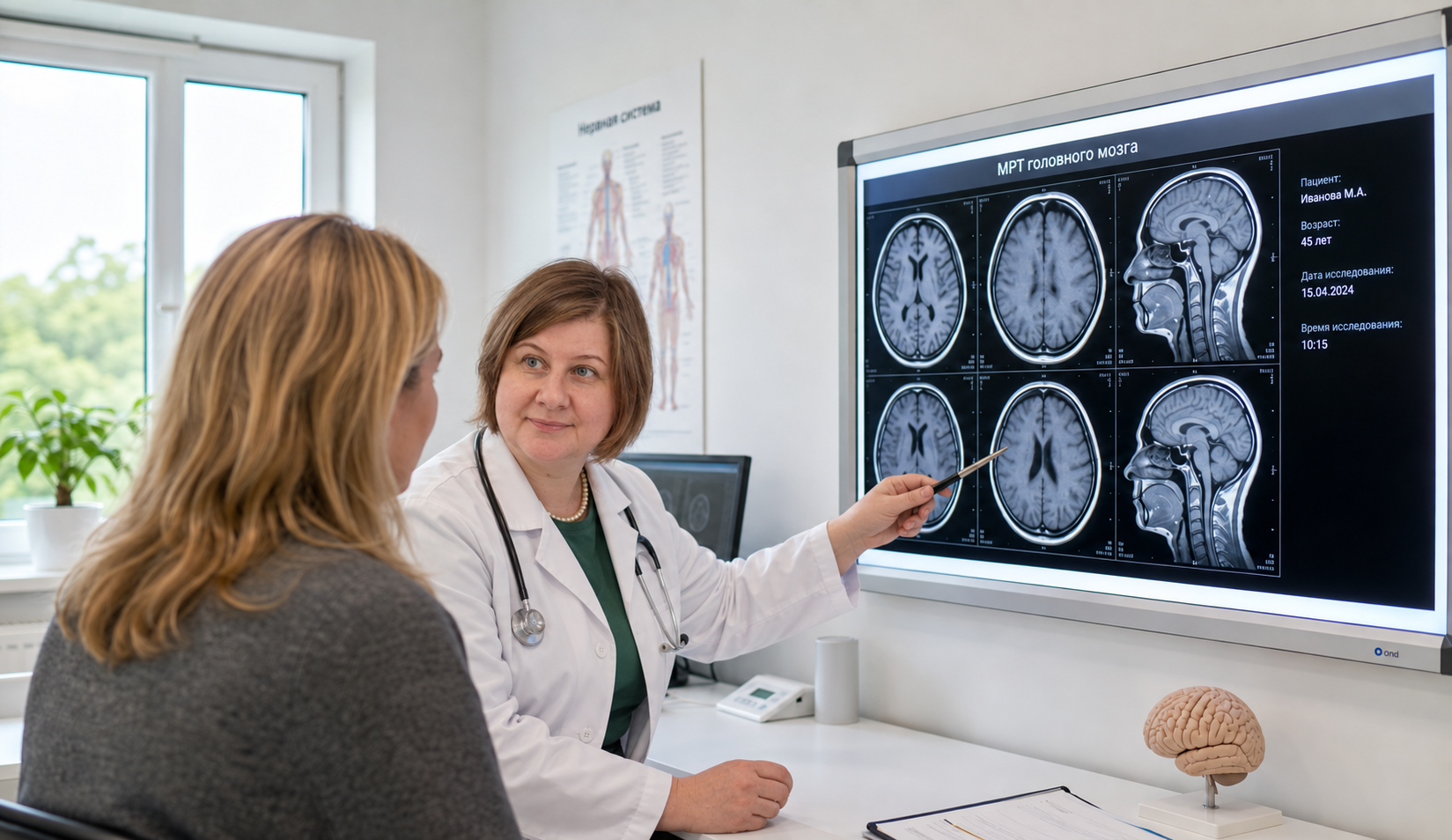
The first stage is a comprehensive examination of the body.
We go beyond simply making a diagnosis. It is crucial for us to understand how all body systems function, evaluate metabolic processes, inflammatory activity, immune status, gut and mitochondrial health, vitamin and trace element deficiencies, as well as other indicators that may influence the development of the disease.
It is high-quality diagnostics that forms the foundation of effective treatment.
What is included in the primary diagnostic list?
- Complete blood count (CBC)
- Biochemical blood test (total protein, lactate, bilirubin, urea, creatinine, ALT, AST, eosinophil cationic protein, NSE, S100, total IgE, TNF-alpha, C-reactive protein, rheumatoid factor)
- Urine organic acids — 60 parameters (urine)
- Amino acids — 48 parameters (blood)
- ASO (Antistreptolysin O)
- Human Herpesvirus 6 (HHV-6), quantitative
*Additional data may be required; the clinic administrators will provide you with more precise information.
Comprehensive diagnostics
The first stage is a comprehensive examination of the body.
We go beyond simply making a diagnosis. It is crucial for us to understand how all body systems function, evaluate metabolic processes, inflammatory activity, immune status, gut and mitochondrial health, vitamin and trace element deficiencies, as well as other indicators that may influence the development of the disease.
It is high-quality diagnostics that forms the foundation of effective treatment.
What is included in the primary diagnostic list?
- Complete blood count (CBC)
- Biochemical blood test (total protein, lactate, bilirubin, urea, creatinine, ALT, AST, eosinophil cationic protein, NSE, S100, total IgE, TNF-alpha, C-reactive protein, rheumatoid factor)
- Urine organic acids — 60 parameters (urine)
- Amino acids — 48 parameters (blood)
- ASO (Antistreptolysin O)
- Human Herpesvirus 6 (HHV-6), quantitative
*Additional data may be required; the clinic administrators will provide you with more precise information.

The exact same diagnosis can have completely different causes. Our task is to find the specific mechanism that led to the development of the illness in your particular case.
We analyze the examination results, medical history, and clinical picture to determine the root causes of the disease: chronic inflammation, metabolic disorders, mitochondrial dysfunction, toxic load, immune disorders, deficiency states, and other factors.
By addressing the cause, rather than just the symptoms, we create the foundation for sustainable results.
Identifying the cause of the disease
The exact same diagnosis can have completely different causes. Our task is to find the specific mechanism that led to the development of the illness in your particular case.
We analyze the examination results, medical history, and clinical picture to determine the root causes of the disease: chronic inflammation, metabolic disorders, mitochondrial dysfunction, toxic load, immune disorders, deficiency states, and other factors.
By addressing the cause, rather than just the symptoms, we create the foundation for sustainable results.

After establishing a complete clinical picture, the doctor develops a personalized treatment program.
Depending on the patient's condition, it may include:
- infusion therapy;
- dietary adjustments;
- ketogenic and metabolic programs;
- mitochondrial support;
- gut restoration;
- anti-inflammatory therapy;
- cellular technologies;
- nutritional support and other modern methods.
Each plan is created individually, taking into account age, diagnosis, examination results, and treatment goals.
Individualized treatment plan
After establishing a complete clinical picture, the doctor develops a personalized treatment program.
Depending on the patient's condition, it may include:
- infusion therapy;
- dietary adjustments;
- ketogenic and metabolic programs;
- mitochondrial support;
- gut restoration;
- anti-inflammatory therapy;
- cellular technologies;
- nutritional support and other modern methods.
Each plan is created individually, taking into account age, diagnosis, examination results, and treatment goals.

Treatment is a process that requires monitoring and timely adjustments.
Our specialists accompany the patient throughout the entire program: they evaluate progress, monitor health indicators, adjust prescriptions, and answer any questions that arise. This approach allows us to adapt the treatment in a timely manner and achieve the best possible results for each patient.
At PlanetaMed, we do not treat an isolated diagnosis — we work with the body as a whole, helping to restore its own resources and regain quality of life.
Support at all stages
Treatment is a process that requires monitoring and timely adjustments.
Our specialists accompany the patient throughout the entire program: they evaluate progress, monitor health indicators, adjust prescriptions, and answer any questions that arise. This approach allows us to adapt the treatment in a timely manner and achieve the best possible results for each patient.
At PlanetaMed, we do not treat an isolated diagnosis — we work with the body as a whole, helping to restore its own resources and regain quality of life.