Headaches
Headaches are the most common reason for visiting a neurologist, occurring in both children and adults.
Often, headaches may be accompanied by other neurological symptoms – dizziness, nausea, and sometimes vomiting.
Headaches can occur in response to provocation, such as stuffiness, weather changes, emotional or physical strain, or they can arise without obvious provocation.
Classical medicine distinguishes two main types of headaches – tension headaches and migraine. Much less attention is paid to other causes of headaches (cephalalgias), although the number of causes reaches several hundred, and all of them matter.
Classic migraine manifests as pain in one half of the head (hemicrania), nausea, vomiting, photophobia and phonophobia, may be provoked by alcohol consumption or certain foods, or may occur without provocation. It is believed that migraine cannot be cured; one can only try to stop an attack, which may last more than a day, with strong analgesics or sumatriptan.
However, as our practice shows, it is possible to get rid of migraines. To do this, it is necessary to adjust the diet and strictly eliminate foods that contribute to the development of migraines – gluten-containing products, casein, and fast carbohydrates. The next stage of treatment is correction of the gut microbiota. Often, after such changes, headaches no longer appear.
Often, cephalalgias in women may depend on the menstrual cycle, intensifying before menstruation or in the first days of the cycle. In such cases, it is necessary to assess hormonal status and strengthen the vascular system.
When examining blood vessels, attention is paid not only to the arterial but also to the venous system. Difficulty in venous outflow leads to heaviness in the head, facial swelling, a feeling of pressure on the eyes, and nosebleeds.
Headaches can be caused by cervical myotonic syndrome; this cause is often overestimated, but that does not mean that for a small number of patients, correcting the neck cannot lead to stabilization of the condition.
Often, migraine-like symptoms can be caused by chronic arachnoiditis, which requires a serious anti-inflammatory course, sometimes including the use of antibiotics, antiviral and antifungal drugs.
Headaches can be a symptom of latent infection or parasitic infestation, which requires separate diagnosis and treatment.
When acute headaches occur, it is necessary to perform an MRI – to rule out a tumor process or hemorrhage.
In all other cases, the examination and treatment plan will be individualized. Our clinic has all the necessary examinations and specialists to establish the correct cause of headache and all the methods to eliminate it.
More details about headaches, their types, and treatment methods are discussed in the lecture at https://planetamed.ru/lektsiya-generalova---golovnaya-bol-metody-lecheniya-i-diagnostika/
We also discuss the principles of headache treatment in the TV program "Medical Quest" on the Doctor channel.
How does treatment work at the "PlanetaMed" clinic?
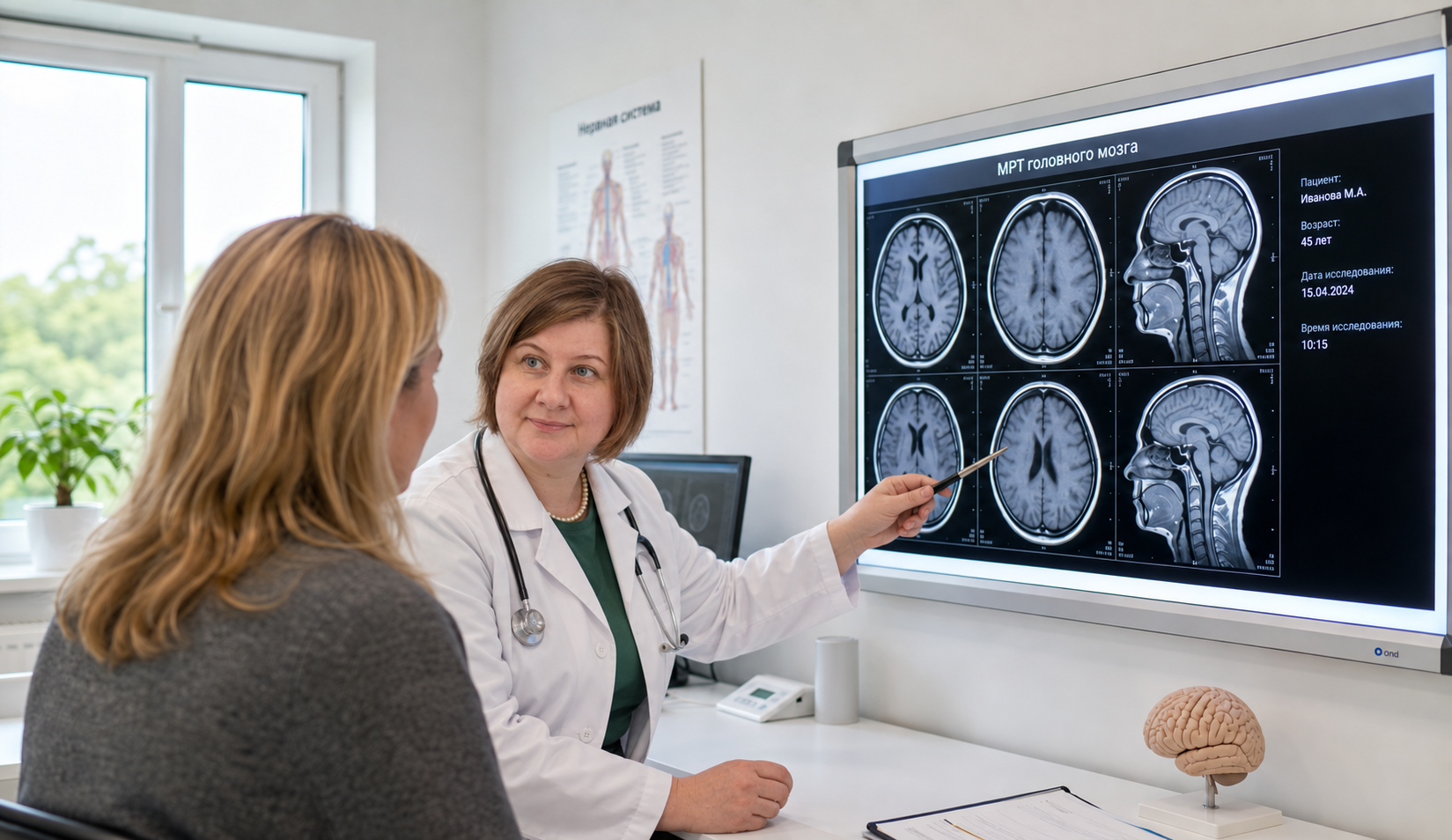
The first stage is a comprehensive examination of the body.
We go beyond simply making a diagnosis. It is crucial for us to understand how all body systems function, evaluate metabolic processes, inflammatory activity, immune status, gut and mitochondrial health, vitamin and trace element deficiencies, as well as other indicators that may influence the development of the disease.
It is high-quality diagnostics that forms the foundation of effective treatment.
What is included in the primary diagnostic list?
- Complete blood count (CBC)
- Biochemical blood test (total protein, lactate, bilirubin, urea, creatinine, ALT, AST, eosinophil cationic protein, NSE, S100, total IgE, TNF-alpha, C-reactive protein, rheumatoid factor)
- Urine organic acids — 60 parameters (urine)
- Amino acids — 48 parameters (blood)
- ASO (Antistreptolysin O)
- Human Herpesvirus 6 (HHV-6), quantitative
*Additional data may be required; the clinic administrators will provide you with more precise information.
Comprehensive diagnostics
The first stage is a comprehensive examination of the body.
We go beyond simply making a diagnosis. It is crucial for us to understand how all body systems function, evaluate metabolic processes, inflammatory activity, immune status, gut and mitochondrial health, vitamin and trace element deficiencies, as well as other indicators that may influence the development of the disease.
It is high-quality diagnostics that forms the foundation of effective treatment.
What is included in the primary diagnostic list?
- Complete blood count (CBC)
- Biochemical blood test (total protein, lactate, bilirubin, urea, creatinine, ALT, AST, eosinophil cationic protein, NSE, S100, total IgE, TNF-alpha, C-reactive protein, rheumatoid factor)
- Urine organic acids — 60 parameters (urine)
- Amino acids — 48 parameters (blood)
- ASO (Antistreptolysin O)
- Human Herpesvirus 6 (HHV-6), quantitative
*Additional data may be required; the clinic administrators will provide you with more precise information.
The exact same diagnosis can have completely different causes. Our task is to find the specific mechanism that led to the development of the illness in your particular case.
We analyze the examination results, medical history, and clinical picture to determine the root causes of the disease: chronic inflammation, metabolic disorders, mitochondrial dysfunction, toxic load, immune disorders, deficiency states, and other factors.
By addressing the cause, rather than just the symptoms, we create the foundation for sustainable results.
Identifying the cause of the disease
The exact same diagnosis can have completely different causes. Our task is to find the specific mechanism that led to the development of the illness in your particular case.
We analyze the examination results, medical history, and clinical picture to determine the root causes of the disease: chronic inflammation, metabolic disorders, mitochondrial dysfunction, toxic load, immune disorders, deficiency states, and other factors.
By addressing the cause, rather than just the symptoms, we create the foundation for sustainable results.
After establishing a complete clinical picture, the doctor develops a personalized treatment program.
Depending on the patient's condition, it may include:
- infusion therapy;
- dietary adjustments;
- ketogenic and metabolic programs;
- mitochondrial support;
- gut restoration;
- anti-inflammatory therapy;
- cellular technologies;
- nutritional support and other modern methods.
Each plan is created individually, taking into account age, diagnosis, examination results, and treatment goals.
Individualized treatment plan
After establishing a complete clinical picture, the doctor develops a personalized treatment program.
Depending on the patient's condition, it may include:
- infusion therapy;
- dietary adjustments;
- ketogenic and metabolic programs;
- mitochondrial support;
- gut restoration;
- anti-inflammatory therapy;
- cellular technologies;
- nutritional support and other modern methods.
Each plan is created individually, taking into account age, diagnosis, examination results, and treatment goals.
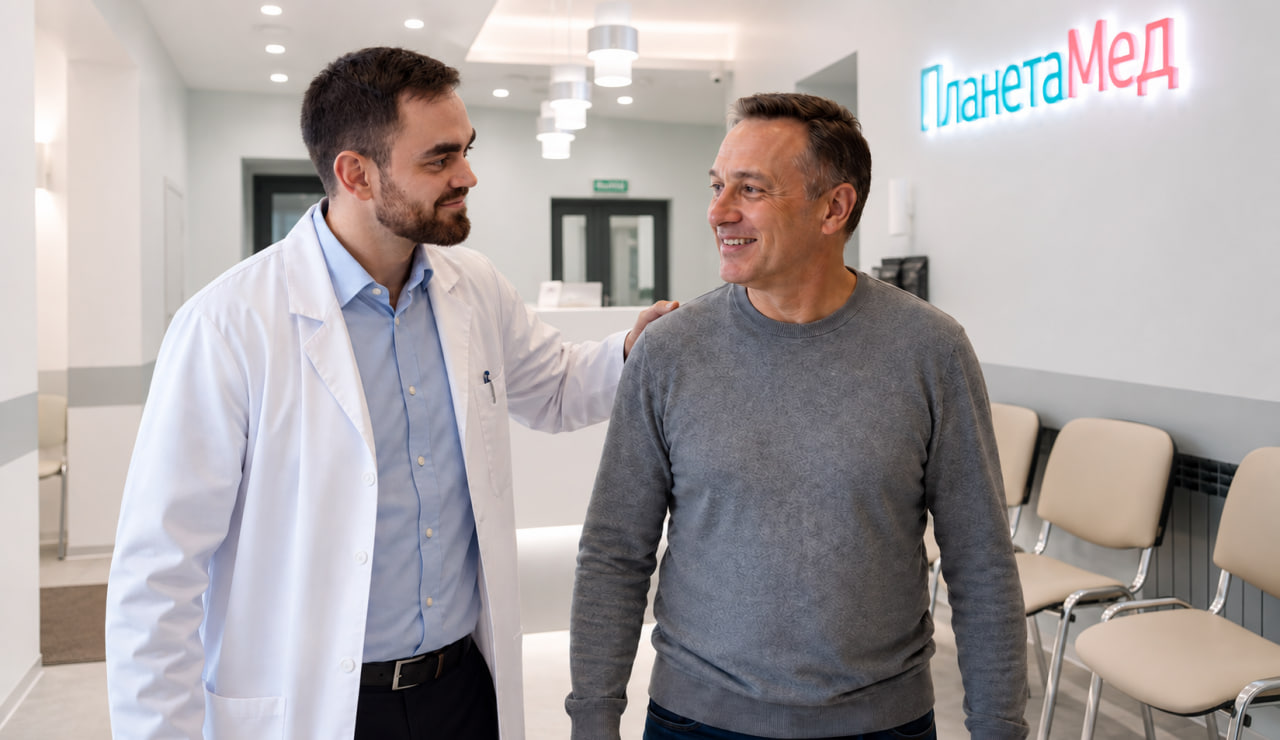
Treatment is a process that requires monitoring and timely adjustments.
Our specialists accompany the patient throughout the entire program: they evaluate progress, monitor health indicators, adjust prescriptions, and answer any questions that arise. This approach allows us to adapt the treatment in a timely manner and achieve the best possible results for each patient.
At PlanetaMed, we do not treat an isolated diagnosis — we work with the body as a whole, helping to restore its own resources and regain quality of life.
Support at all stages
Treatment is a process that requires monitoring and timely adjustments.
Our specialists accompany the patient throughout the entire program: they evaluate progress, monitor health indicators, adjust prescriptions, and answer any questions that arise. This approach allows us to adapt the treatment in a timely manner and achieve the best possible results for each patient.
At PlanetaMed, we do not treat an isolated diagnosis — we work with the body as a whole, helping to restore its own resources and regain quality of life.
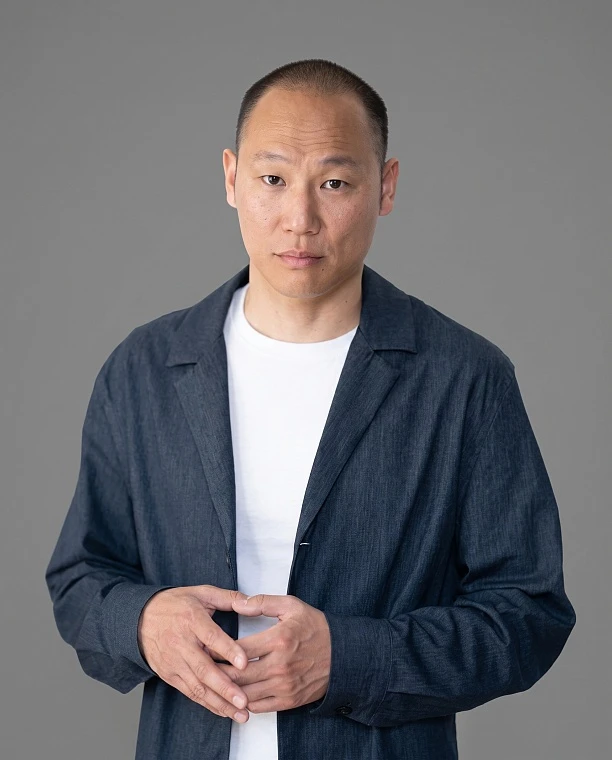
Anton Meliksovich
- Neurologist
- Epileptologist
- Integrative medicine specialist
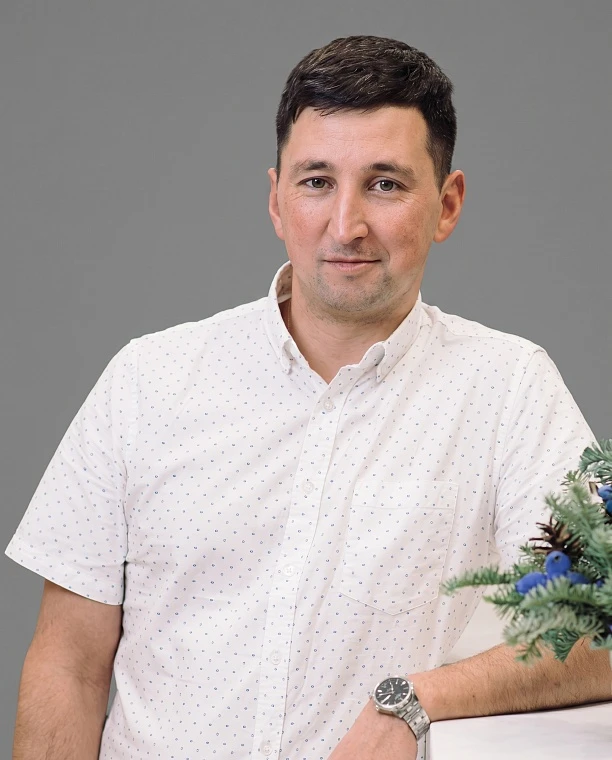
Timur Ruslanovich
- Neurologist
- Epileptologist
- Integrative medicine specialist
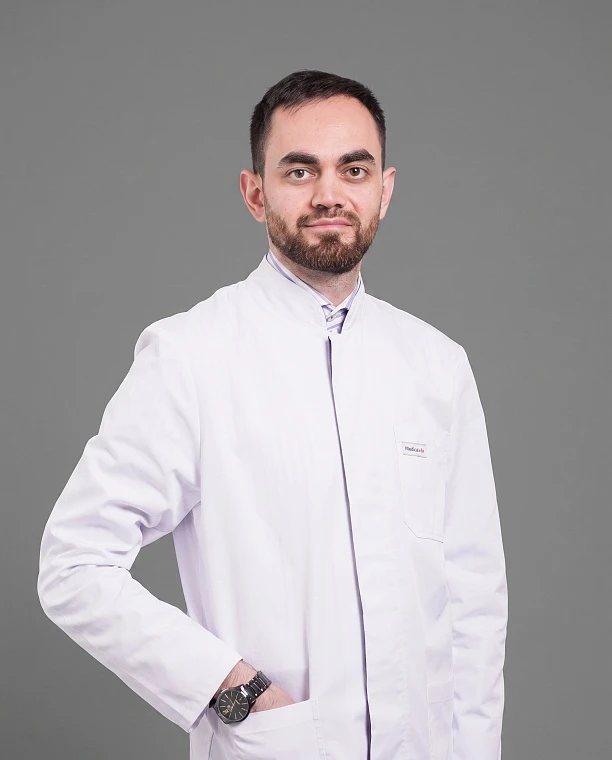
Latif Akifovich
- Neurologist-epileptologist
- Integrative medicine specialist
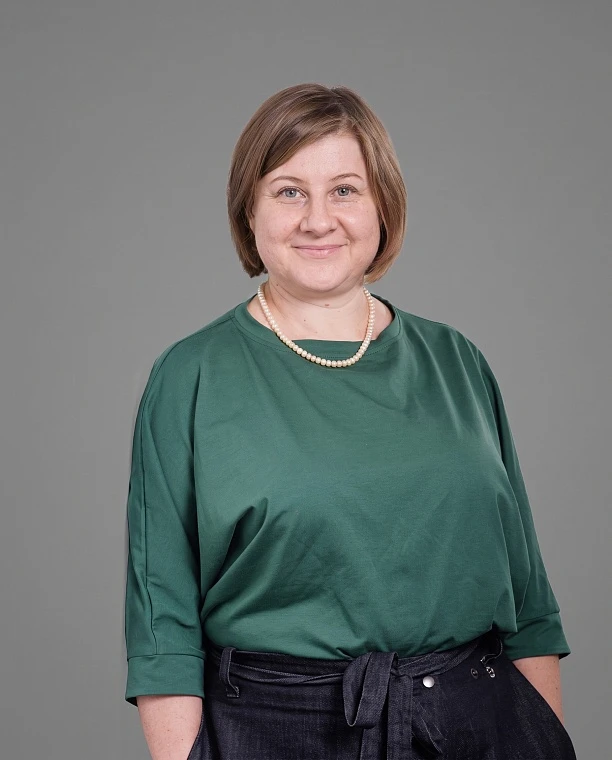
Yulia Vladimirovna
- Neurologist-epileptologist
- Neurologist
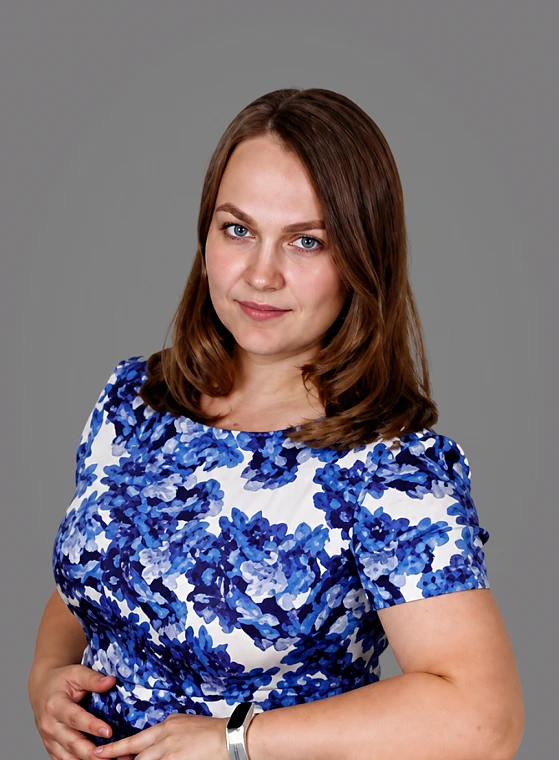
Anna Igorevna
- General Practitioner (Family Medicine)
- Neurologist
- Integrative medicine specialist